College Board Forum 2025
What’s Working in Recruitment: Advice from College Board’s Preferred Partners
Lead with data. Engage students early. Learn from experience.
That’s the shared playbook for stronger recruitment that five College Board preferred partners, organizations that support clients with our recruitment and enrollment solutions, revealed in a candid conversation on navigating the changing college enrollment landscape.
Their message was clear: As institutions face evolving state policies and federal guidance in addition to more diverse and discerning student pools, the future of recruitment belongs to those who pair smart data with meaningful opportunities that keep students at the center.
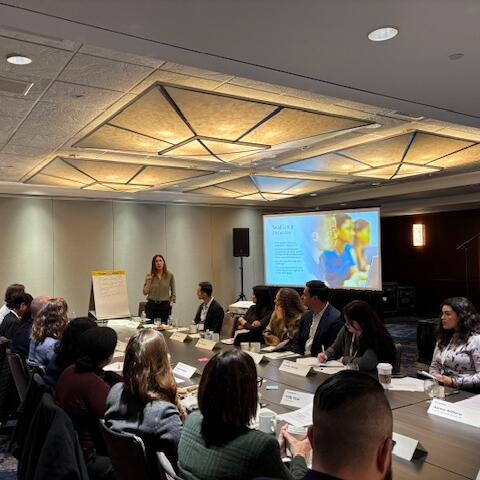
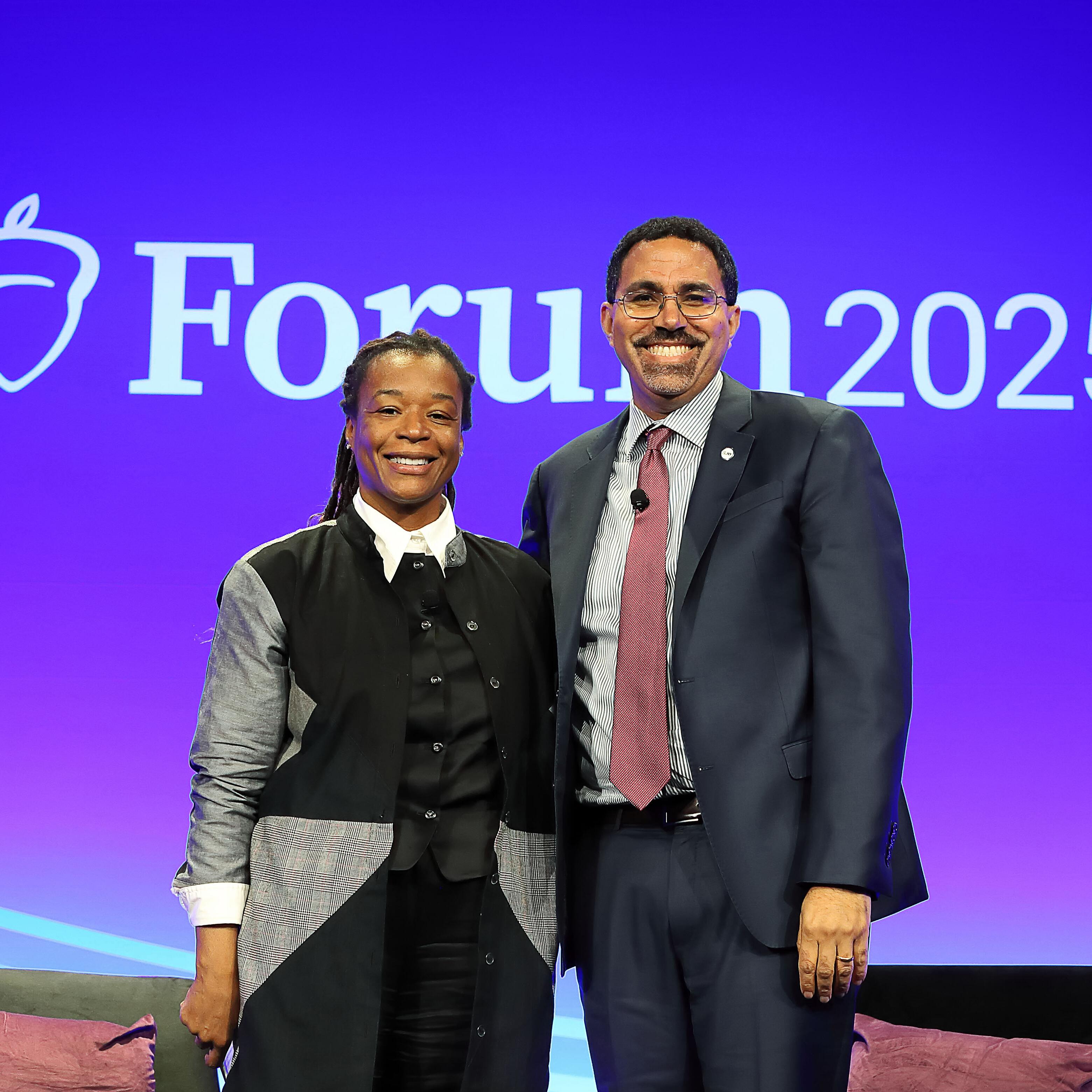
College Board brought five competitors to Forum 2025 to answer questions directly from higher education professionals and members. The discussion featured Jonathan Wehner of Carnegie, Hope Krutz of EAB, Buni Neighbors of Two Ocean, Alicia Ortega of Ruffalo Noel Levitz (RNL), and Rich Whipkey of Waybetter.
Lead with data-driven strategies, but don’t stop there
Every successful recruitment strategy begins with data, but data alone aren’t enough. This caveat is especially true at a time when traditional measures, like response rates for student inquiries and email open rates, no longer tell the full story of students’ interests or intent.
Panelists agreed that institutions are most effective when they pair data with storytelling and behavioral insights. Find opportunities to combine analytics with content that resonates based on what students care about.
Panelists urged colleges to leverage deeper indicators of intent, such as students’ saved college profiles and interests, to build on their curiosity and engagement.
Wehner from Carnegie emphasized the value of College Board features like Interest in My College (IMC) and Interest in My Peers (IMP) in Search to help institutions understand where their brand is resonating and discover students whose peer interests may make them good fits. He also noted the often-untapped potential of Advanced Placement® data to identify strong academic matches earlier in the pipeline.
With that data on hand, institutions can make informed decisions on where to engage students. And Neighbors, from Two Ocean, underscored that for their clients, traditional outreach channels have been highly effective in engaging prospective students:
- Print only: Students were 11 times more likely to enroll.
- Combination of email and print: Students were 18 times more likely to enroll.
Start earlier to build time for discovery and connection
Where you reach students is important, but when you reach them can be truly powerful.
Krutz from EAB noted that more than half of students begin their college search by the spring of junior year, highlighting the urgency of early engagement. For EAB clients, Krutz said, ConnectionsTM has emerged as a powerful way to reach students, not only those in who are in their early days of high school but also those who may not be reachable through other channels.
The recent launch of Mutual Match in Connections builds on the insight to leverage deeper indicators of intent.
When a student’s preferences—college type, major, location—align with an institution’s audience, that institution appears as a personalized match in the BigFuture® School app. Early results show the feature is driving 40 percent of all Request for Information (RFI) clicks.
Find opportunities in challenges
As more questions emerged from the audience, one piece of advice for enrollment managers was to study incomplete applications. Looking at moments of disengagement can be a guide for change. Understanding where students stop in the process can reveal more than logistical barriers. These moments can highlight missed opportunities to ensure students feel seen and foster ways to improve that can directly increase yield.
Neighbors shared that her son was considering a list of colleges, and when he finally chose one, his choice surprised the family. It wasn’t a school they even realized was on his list. When asked why he picked it, her son simply said: “Because they want me.”
The story expresses a fundamental student impulse. Behind every click, every RFI, a student is searching for a signal there’s a place for them. Real opportunity awaits when schools use insights gleaned from moments like these to help students feel like they belong.
The first-of-its kind conversation with College Board’s preferred partners may seem rare in today’s competitive landscape. Yet this conversation demonstrates College Board’s powerful member network in action, bringing leading voices together to share insights that strengthen the entire enrollment community.