College Board Forum 2025
‘A Good Job and Fulfilling Life’: John King Calls for Abundance and Relevance in Higher Ed

John King has spent his adult life trying to make school a more compelling and hopeful place for students, informed by his own troubled childhood and the sense of refuge he found in attentive teachers.
“The thing that always gave me a sense of hope and purpose was school, teachers who cared about me,” said King, chancellor of the State University of New York who was a secretary of education in the Obama administration. “If not for the teachers I had … I would not be sitting here today. I don’t think I’d be alive tonight.”
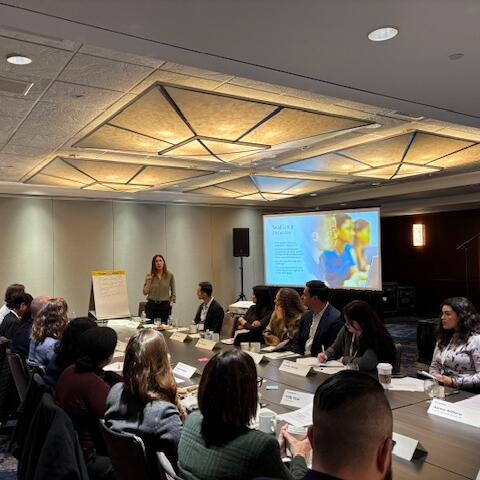
That sharp reminder of the power of educators drew loud applause from the 2,000 teachers, college administrators, and school district leaders gathered at College Board’s 2025 Forum in New York City. In a conversation with Kedra Ishop, College Board’s senior vice president of higher education, membership, and access, King laid out practical steps that universities can take to strengthen trust and remain relevant amid student skepticism and a rapidly shifting economy.
Seeing college and career as ‘deeply connected’
“There is plenty of opportunity to give more students a pathway to successful careers and fulfilling lives if we see college and career as deeply connected,” King said, calling for a huge expansion in internship opportunities for university students and more career mentorship at the high school level. Especially for students struggling with motivation, seeing a direct link between coursework and life outcomes can be a game changer, he said.
“There’s so much power in students having clarity about this connection between high school and their future,” King said. He called on universities to be transparent about outcomes data for their graduates and be open to improving the value proposition for low-performing programs. “If we have programs where the students who graduate are making less than students with a high school diploma, that’s a problem. How do we make it so every student who graduates can get a good job and lead a fulfilling life?”
King also cited career fields where there’s obvious market demand and strong student interest, but not enough capacity at the university level. In fields like nursing and computer engineering, universities struggle to hire faculty and secure enough clinical or internship spots to grow their programs. SUNY recently launched a program that covers the cost of a master’s degree for nurses who agree to teach in a community college. And public universities are working with smaller businesses and firms to encourage them to start internship programs, so that more students have the chance to gain work experience before graduation.
There’s also pressing need to create trusted assessments for early college pathways, King said, so that employers will have confidence in the credentials earned through schools and colleges. “What’s the right assessment design that supports good instruction, that employers will believe is a good indicator of student readiness, that faculty will believe is a good indicator of student readiness?” King asked. “College Board has 125 years of experience thinking about this!”