Prepárate 2026
Empowering Spanish-Speaking Families: Building Trust, Connection, and Opportunity
Parents play a profound role in shaping their children’s aspirations and decisions across their years in K–12 and beyond. But for many families, the responsibility to be a guide for planning what comes after high school can feel overwhelming. Too little information—or information that’s confusing—is often a barrier.
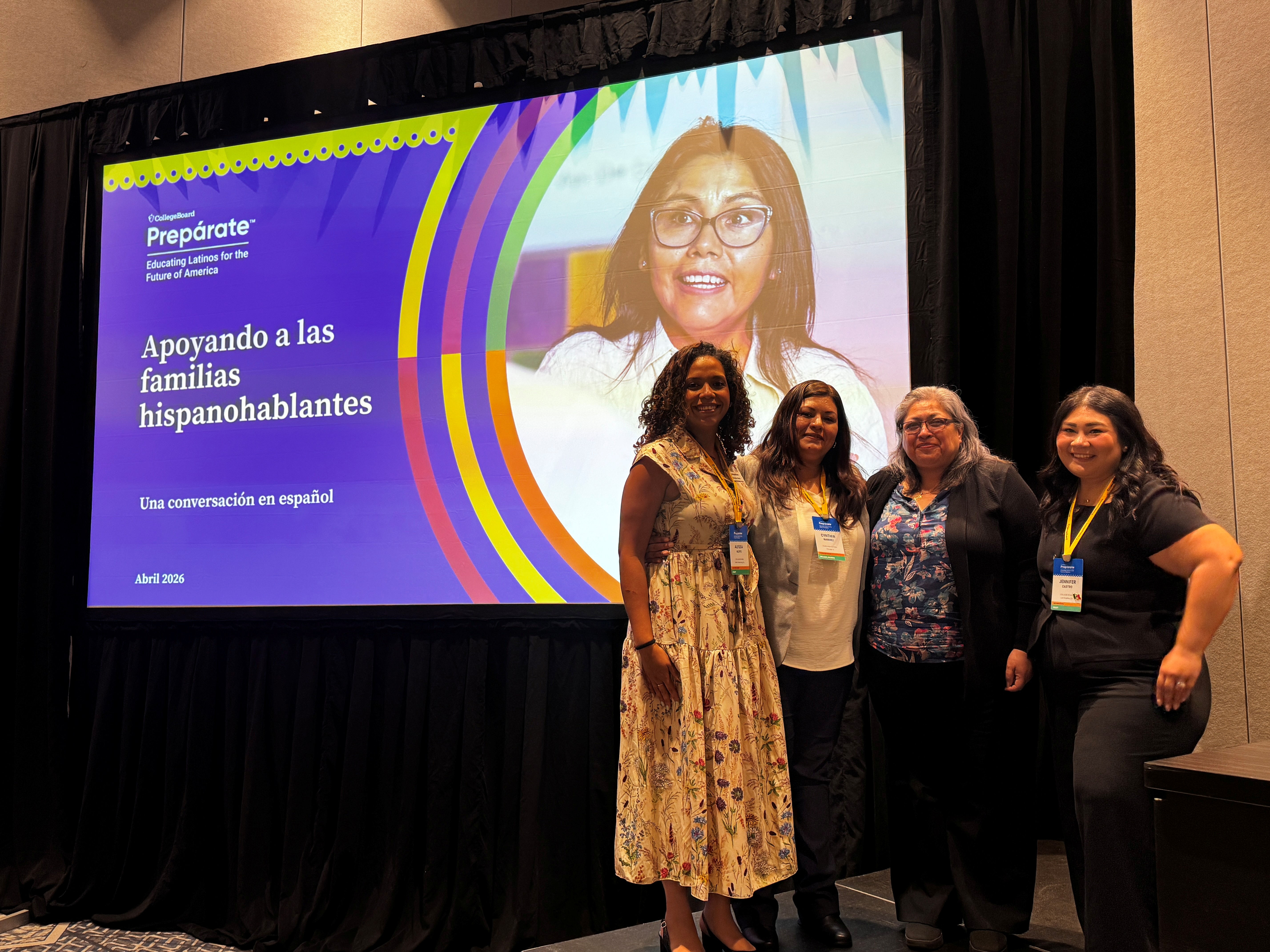
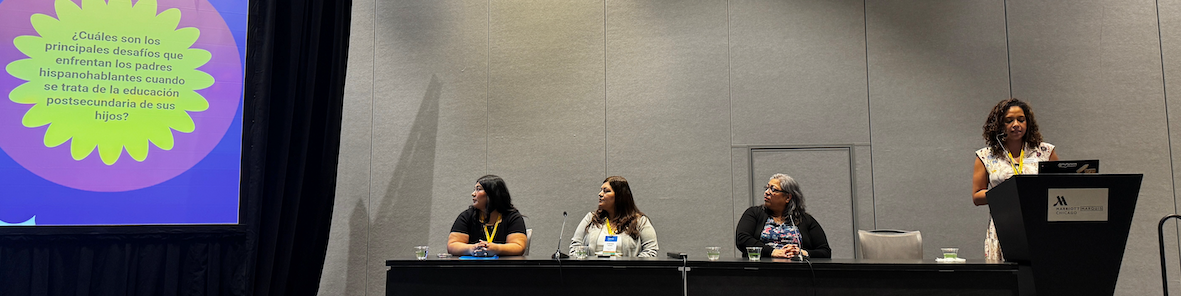
Attendees at the 2026 Prepárate™ conference in Chicago engaged this challenge head-on through a conversation featuring a Spanish-speaking mother, an advisor dedicated to supporting Latino parents, and a College Board representative. Together, they explored how schools and educators can more effectively serve Latino families.
Across Latino communities, many parents recognize the important role they play in guiding their children’s postsecondary plans. At the same time, many parents report lacking the resources or clarity needed to fully support those decisions. This tension between responsibility and access to information and resources highlights a broader challenge: ensuring families feel both empowered and equipped to navigate what comes after high school.
Blanca Díaz, a parent of a high school senior at Curie Metro High School in Chicago, said navigating the K–12 education system and college application process can feel complex and, at times, distant for Spanish-speaking families. Language barriers, unfamiliar processes, and limited access to information can create gaps not only in knowledge but in confidence.
But when educators work intentionally to welcome families, parent and family engagement becomes more natural. Seeing their language, culture, and experiences reflected in the school community transforms participation by creating a sense of belonging needed to build trust. Yet, trust is not built through one-way communication or occasional outreach. It develops over time through consistent, authentic relationships.
Cynthia Ramírez, parent coordinator at Curie Metro High School in Chicago, said schools need to show up and establish consistent but flexible connection points to families in many ways. For some families, it takes place in familiar community spaces like schools, local organizations, or neighborhood gatherings. For others, it happens through digital platforms they already use, such as WhatsApp or social media.
In these spaces, engagement becomes an opportunity to listen, build relationships, and offer clear, relevant guidance on postsecondary planning in ways that feel accessible and trustworthy. When schools design engagement opportunities that reflect the realities of families’ daily lives, participation becomes more consistent and sustainable. Ramírez has seen firsthand how parent engagement grows when schools offer activities that are meaningful to families, such as computer classes or dance lessons, and then connect those experiences to information in their language that helps them support their children’s futures.
This kind of relationship-centered approach points to a broader opportunity. There is a clear need to better support Spanish-speaking families not only by expanding access to information, but by strengthening the relationships that make that information meaningful. Efforts such as increasing Spanish-language resources and creating more inclusive opportunities for engagement are important steps, but they are most effective when grounded in trust and sustained connection.
Ultimately, this conversation was not about quick fixes. It was about rethinking how educators connect with families and how partnership in education is defined.