Prepárate 2026
The Books That Change Everything: Elizabeth Acevedo on Trusting Students with Complex Stories
Elizabeth Acevedo wants us to pay attention—to each other, to the world around us, to the people and the stories we overlook.
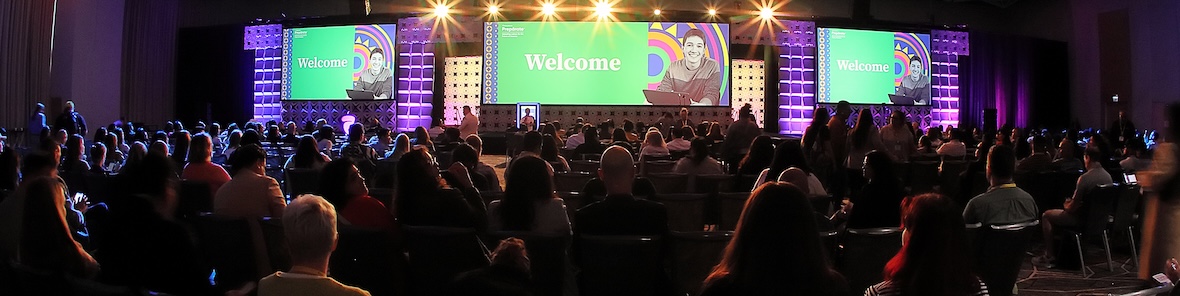
“Every conglomerate in the world right now is fighting for our attention,” she told a packed audience of teachers and education advocates at College Board’s 2026 Prepárate™ conference in Chicago. Being in a room with hundreds of people talking about literature and learning felt like a form of joyful resistance. “This is, for me, one of the most beautiful and radical acts we can be engaging with.”
Acevedo is especially attuned to the beauty and possibility of the classroom. As a poet and a National Book Award-winning author, she focuses on young people who are finding their way in the world amid the complexities of family life, personal identity, and artistic ambition.
“I’m really concerned with the stories that I knew growing up, but didn’t see on the bookshelf,” explained Acevedo, who grew up in Harlem as the daughter of Dominican immigrants. The right kind of book, handed to a student at the right moment, can serve as an entry point to the whole world of literature.
Acevedo began her career as an 8th-grade teacher, and she recalled one student who seemed resistant to reading—until she found books that took her life and her world seriously. “Within two weeks, this young person who had told me she’s not a reader had finished every book I put in front of her,” Acevedo recalled. “We found the draw, we found the particular readership path she wanted to be on.”
Her greatest hope as a writer is that young people have that experience when they pick up her books, like the acclaimed The Poet X, about a young Afro-Latina girl finding her voice through poetry.
The goal isn’t to deliver neatly packaged life lessons, Acevedo said, but to prompt young people to ask deeper questions about the world and their place in it. She wants students to feel a sense of agency over their lives—an antidote to the anxiety so prevalent in much of the discussion about young people. “Life is not happening to me,” she wants her readers to know. “I am powerful, and the choices I make can take me somewhere.”
She also wants younger readers to know that the world is messy, that people aren’t all good or all bad, that parents have their own complicated lives and feelings they’re trying to sort out. Trusting children to grapple with moral nuance is a key part of what makes Acevedo’s writing so compelling. “There’s no perfect figure. There’s no perfect hero, there’s no perfect villain,” she said. “I think it’s important for young people to see that early.”
At the end of a rich conversation about literature and teaching, moderator Natalie Muñoz, a professor of social work at Rutgers who specializes in Afro-Latina culture, thanked Acevedo for being a light to her community and the broader world.
“And I want to thank the educators in the room,” Muñoz added. “You’re often the person who hands a student a book that changes everything.”


