APAC 2025
Introducing AP Cybersecurity
Accelerating Pathways to In-Demand Careers
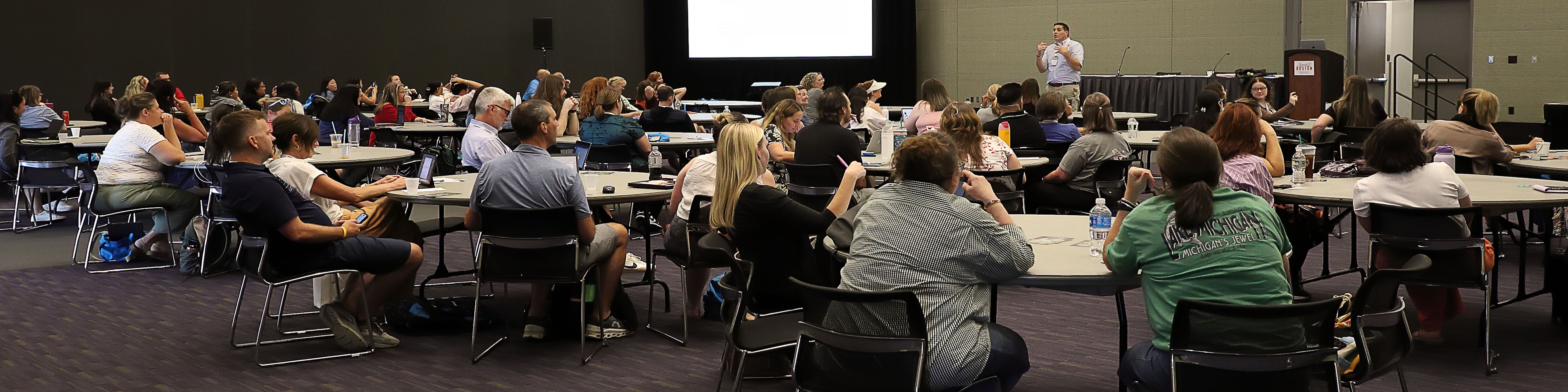
The AP® Program is expanding—opening new doors for students whose aspirations span both college and career. That expansion was front and center at the 2025 AP Annual Conference, including the session “Introducing AP Cybersecurity,” where educators previewed this new AP course, designed to develop professional skills in this high-growth, high-demand field.
Led by Andy Tucker, Senior Director of AP Access at College Board, with co-presenter Coral Riley, a National Board Certified CTE teacher at Pine Lake Preparatory School in Mooresville, NC—and AP Cybersecurity pilot teacher and trainer—the session emphasized this course’s role in expanding access, career readiness, and real-world learning.
A New Kind of AP for a Changing Student Landscape
Tucker began the session with an overview of College Board’s Career Kickstart initiative—a new category of AP courses that combine rigorous academics with real-world applications. These courses are designed for broad accessibility, including students without prior experience in coding or computer science and those who do not fit the traditional profile of an “AP student.”
Students who earn qualifying scores in AP Cybersecurity will receive:
- College credit and placement
- An employer-endorsed credential
Session attendees learned how the course was designed to fit into a wide range of high school environments—including existing CTE programs—and help students explore and prepare for future careers in cybersecurity, information technology, and any other career where data and technology is involved. Riley emphasized that this course isn’t just for students interested in a career in cybersecurity, but it builds essential skills for all students navigating a complex digital landscape.
Real-World Scenarios Make Learning Accessible
The session engaged participants in sample cybersecurity scenarios from the course, which are central to the instructional design. Scenarios address everyday challenges—like detecting unauthorized access to a Wi-Fi network or protecting against AI-driven voice scams—and required attendees to apply cybersecurity concepts in realistic situations.
“High school students are susceptible to falling for these scams because of their confidence in their social media literacy,” explained Riley.
Workforce-Ready Skills, Low Barriers to Entry
The course covers five units emphasizing professional and durable skills—like risk assessment, communication, and ethical reasoning—that are essential across technical fields. According to data shared in the session, AP Cybersecurity teaches 7 of the top 10 most-requested job skills in the tech sector.
In the Q&A with attendees, Tucker noted that the course requires only modest technology, and free professional learning for first-time teachers to support adoption. It helps address the lack of access to cybersecurity education for many students.
“There’s not a financial block for your school system,” Tucker noted. “This is a low-tech framework.”
AP Cybersecurity launches in the 2026–27 school year and is a strong step forward in ensuring more students gain the knowledge, credentials, and confidence to succeed in a digital world. As Tucker shared, this course empowers schools to meet students where they are—and take them further.