APAC 2025
First-Hand View—A Day in the Life of an AP Reader
Behind the Scenes of Scoring Success
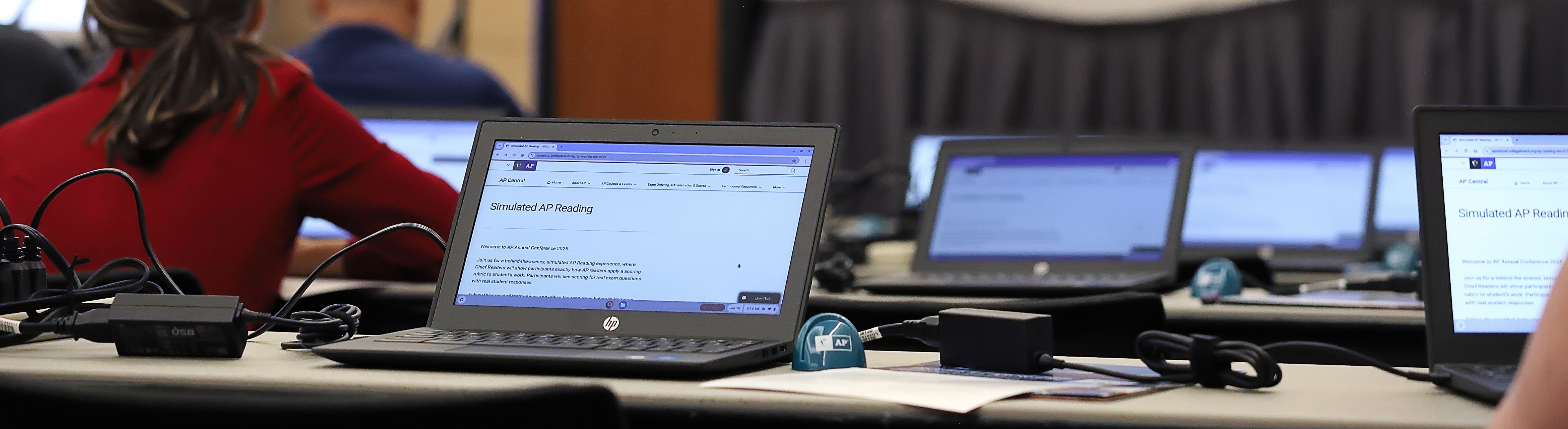
AP® readers are rock stars. That’s my main takeaway after experiencing an Advanced Placement® Reading simulation during the AP Annual Conference in Boston. As part of the 2025 event, the AP Program hosted several simulations of AP Readings, the annual events where students’ free-response questions in AP Exams are scored by hundreds of college faculty and AP teachers.
I had the opportunity to step into the shoes of an AP Comparative Government and Politics reader. The two-hour experience left me mentally exhausted and in awe of the thousands of educators who commit themselves to this work for several weeks each summer. These AP readers, composed of high school and college faculty from across the country, gather in person or virtually to score student responses. Their efforts are essential to the AP Program, ensuring consistency, fairness, and academic rigor in how exams are evaluated.
Our session began with a crash course in the scoring rubric, what real readers usually spend a full-day mastering under the guidance of experienced table leaders. This rubric determines how students earn points for their responses. To me it felt like learning a new language. Then, it was time to dive in.
On my screen appeared a student’s response, and I had to determine: What was the intent? Was the logic sound? Did they provide enough evidence to earn the point? “Use this data on the freedom of the press to determine the trends in the democratization of Mexico,” one prompt read. It wasn’t just about checking boxes, it was about interpreting meaning, assessing clarity, and respecting the complexity of each student's thinking.
Real readers work in constant dialogue with table leaders and peers. Questions are encouraged. Consensus is built. Scoring isn’t a mechanical task, it’s a collaborative process centered on fairness, rigor, and integrity.
By the end of the session, I was both intellectually spent and inspired. I had a newfound appreciation for the deep thoughtfulness students bring to AP Exams, and the extraordinary care readers take to honor that work.
Being an AP reader, even briefly, showed me that scoring isn’t just about grading. It’s about recognizing learning, rewarding critical thinking, and upholding the standards of an academic community devoted to excellence.