A Dream Deferred | HBCU Conference 2026
Bridging the Distance: How Higher Ed Can Support Rural Students

If small-town and rural students are underrepresented at major colleges and universities, it’s not because they aren’t valued.
“Colleges and universities recruit rural and small-town students because they have a lot to offer to [their] campuses,” said Marjorie Betley, deputy director of admissions at the University of Chicago, during a panel session on small-town and rural communities at the 2026 A Dream Deferred™ and Historically Black Colleges and Universities (HBCU) Conferences.
Betley, who also serves as the executive director for the STARS (Small Town and Rural Schools) College Network, highlighted the resilience, work ethic, and empathy often found among rural students as qualities that make for good college candidates.
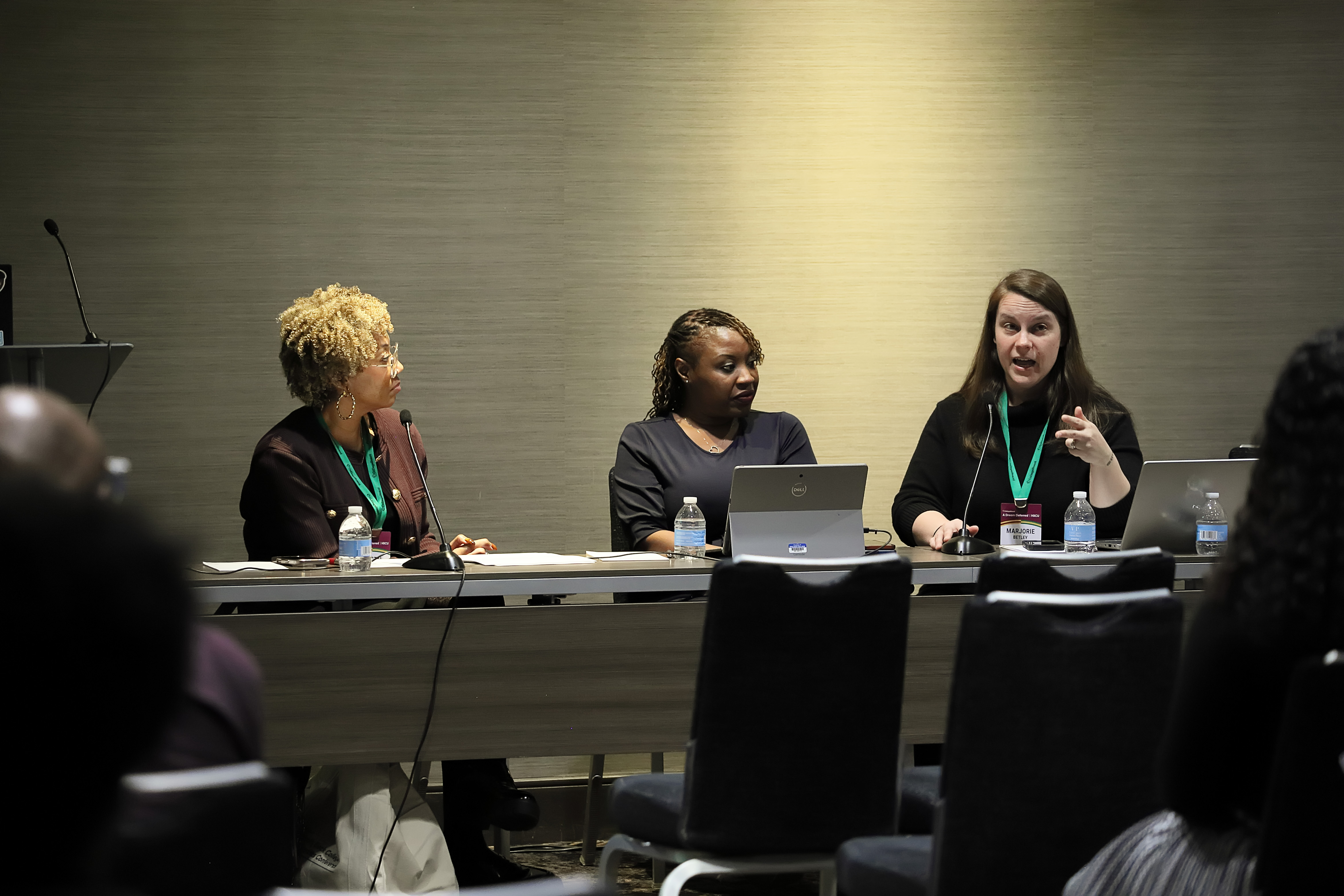
Left to right: Crystal Newby (College Board), Christy Johnson (Spelman College), and Marjorie Betley (University of Chicago)
Rural values are a great strength. Christy Johnson, assistant director of admissions at Spelman College, added that rural students tend to be community-minded—showing exceptional capacity for relationship-building and extending support to others, especially those who come from similar rural backgrounds.
But attracting rural students to colleges has its challenges, Betley explains. Many rural communities are located in higher education deserts, making it difficult for recruiters to conduct school visits or for students to visit campuses. It’s not uncommon for rural students to have limited resources—including counseling, curriculum options, or access to technology and internet. And when it comes to college-going culture, they may have fewer role models in their community, such as a parent who has less experience navigating the college application process.
This is where the STARS College Network comes in.
The network is a collective of 32 top colleges and universities that work with high schools and access organizations to widen higher education pathways for rural and small-town students.
To support students to and through college, the network operates under four pillars:
- Travel to rural and small-town communities: STARS partners are committed to traveling to and building relationships with rural students and educators. In 2025, STARS members visited 1,100 rural high schools in 49 states.
- Free programs on STARS campuses: Rural and small-town students can participate in fly-in college visits at no cost. These visits enable students to set foot on campus so they can preview and envision their college life.
- Virtual college access and affordability programming: STARS offers virtual webinars for small-town and rural students to learn crucial information about the college search and application process. Plus, students can obtain free, online college-level certifications through Schoolhouse.world and Khan Academy®, bolstering their readiness and success in college.
- On-campus support systems: STARS colleges provide dedicated support and guidance to rural students once they’ve enrolled, often connecting them with student ambassadors.
STARS programming is free for students and families. Students can use the National Center for Education Statistics' locales for “rural” and “town” to determine if their school qualifies as a rural or small-town high school for STARS programs.
STARS member institutions form a diverse range: “Big schools, small schools, urban schools, a women’s school, religious schools, liberal arts colleges,” said Betley as she listed out the types of university partners in STARS. In her pep talks to the rural students she supports, she tells them, “You have a lot of options. You have a lot of doors open to you. What do you want?”
To close the session, Crystal Newby, senior director of strategic admission, access, and diversity initiatives at College Board, asked the panelists to describe what true rural student success looked like.
Johnson responded, “Get them onto a college campus, then they can be the change agent. Once they get their education and they’re into their career, they can go back to their communities and share.”


