Careers
How Nissan is Addressing the Automotive Talent Shortage with Schools
To elevate schools and organizations that provide career information and help students build career-relevant skills, College Board is publishing a series of spotlight articles to help illuminate why this work is so important—and how it’s changing lives.
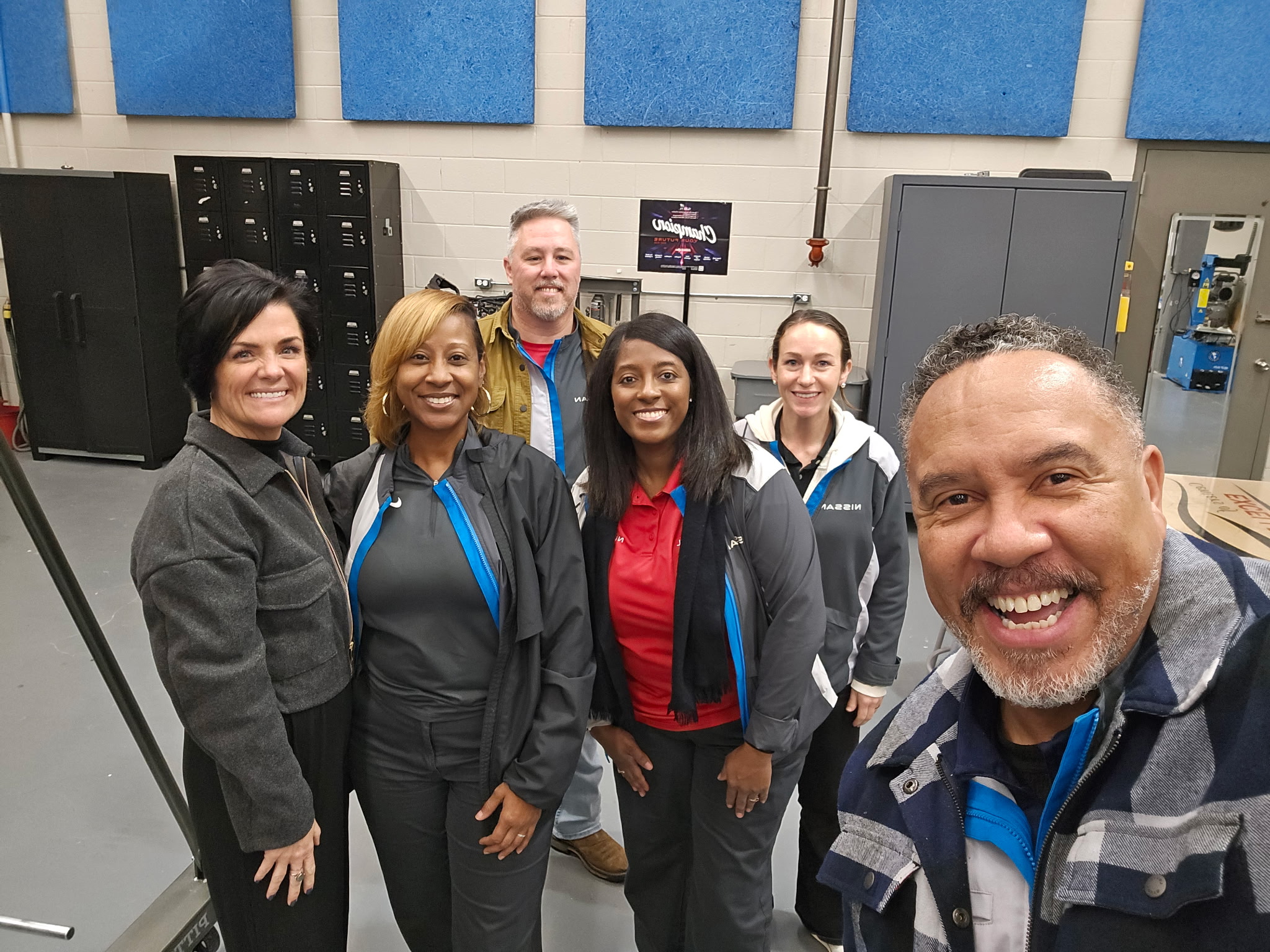
As the automotive industry is challenged by the manufacturing talent shortage, employers like Nissan USA are testing efforts to create sustainable, long-term workforce solutions. Nissan is starting at the source of the talent pipeline—high schools.
Through its Centers of Excellence (COE) program, Nissan is tackling an issue that has long plagued CTE education: recruiting industry professionals to teach in high schools. The unique solution? Nissan is sending its own employees to serve as instructors while maintaining their industry salaries.
Though only two years old, its model has proved to be a success in four high schools in a manufacturing-heavy area of Tennessee, now expanding to four more high schools in Mississippi.
The founder of the COE program, Dr. Joy Rich, manager of Workforce Development and Community Relationships, now sees an opportunity for employers across industries to take a page out of Nissan’s book to help address the broader talent shortage nationwide.
“We're not just training people to work for Nissan,” said Dr. Rich. “This is bigger than that. We know we are growing talent for our competitors. We’re growing a workforce, and rising tides lift all boats.”
The Problem
When Dr. Rich joined Nissan in 2024, she started with a listening tour to understand pain points from the Department of Education, workforce leaders, and schools in Tennessee.
The issues varied:
- Employers said that most entry-level candidates lack the skills they need.
- Teachers faced near-impossible standards to stay current with the latest changes in industry, especially in fast-moving fields like cybersecurity and AI.
- Schools struggled to recruit qualified CTE teachers when industry salaries outpace what schools can offer.
Her main question to stakeholders: If Nissan wasn’t just your partner, but your best partner, how would we help?
The resounding answer was to find a way to provide schools with CTE teachers who could equip students with career-ready skills.
The Approach
The COE program piloted with four high schools within 50 miles of its powertrain plant in Decherd, Tennessee, serving nearly 200 students. Nissan provided its own advanced manufacturing employees from the Decherd plant as full-time instructors and partnered with Tennessee College of Applied Technology (TCAT), where they earned the training and technical certificate needed to become adjunct professors.
At each high school with a Center of Excellence, Nissan develops signs for their classrooms, paints, and furnishes the rooms in a way that facilitates group discussions and hands-on projects.

Students in COE classes receive hands-on instruction, plant and training center tours, and the opportunity to receive industry certification through Manufacturing Skill Standards Council (MSSC) Certified Production Technician training. Modules include safety, quality, manufacturing process and production, and maintenance awareness.
Meanwhile, Nissan maintains the instructors’ full-time industry salaries.
The Results (So Far)
In the high schools in Tennessee, schools saw an average of approximately 150% growth in enrollment between the program’s first and second year. In the first year specifically:
- Seven students graduating from Franklin County accepted positions in Nissan’s industrial maintenance program where they can continue training while working.
- Relating to the MSSC Certified Production Technician (CPT) 4.0 modules:
- 100% of programs met or exceeded the state pass rate for two modules (Safety and Quality Practices & Measurement).
- 50% of programs met or exceeded the state pass rate for the Maintenance Awareness module.
- 25% of programs met or exceeded the state pass rate for the Process and Production module.
- Students’ professional skills and confidence are flourishing in addition to their technical skills.
This year, the COE model is expanding to four high schools in Mississippi within 50 miles of Nissan’s Canton plant, with 20 teachers being trained. The program is partially funded by Accelerate Mississippi, an office aimed at enhancing workforce development and economic growth in the state, which will fund the equipment costs and instructors’ compensation gap.
Built for More Than Automotive
The COE program was developed to enhance workforce development and grow the U.S. automotive industry. Nissan is paving the way, providing a gold-standard employer engagement model that is quickly gaining recognition in the automobile manufacturing space. But the model can be scaled and adapted to other industries like healthcare and IT.
“Industry has such a powerful role in education, but some of them don’t know that– they haven’t been on the educator side of the equation,” said Dr. Rich. “My hope is that we can help other employers realize the power they hold in students’ lives to ignite passion and gain the skills they’re looking for in talent.
Employers have a voice. It’s a powerful voice– and it’s missing in a lot of school systems.
Dr. Joy Rich, manager of Workforce Development and Community Relationships
If you’re an employer and would like to help equip thousands of students with the skills they need for high-demand, high-growth jobs, consider partnering with College Board as an AP Career Kickstart industry advisor. Learn more here.
Nissan is endorsing AP Business with Personal Finance in service of a shared mission to bring career-focused learning into the classroom.
