College Board Forum 2026
How Much Does College Cost in 2026? What Students Actually Paid After Grant Aid
College Board’s Trends in Higher Education 2026 report finds net prices are lower than 20 years ago.

What’s the average published price for in-state tuition and fees at public four-year institutions?
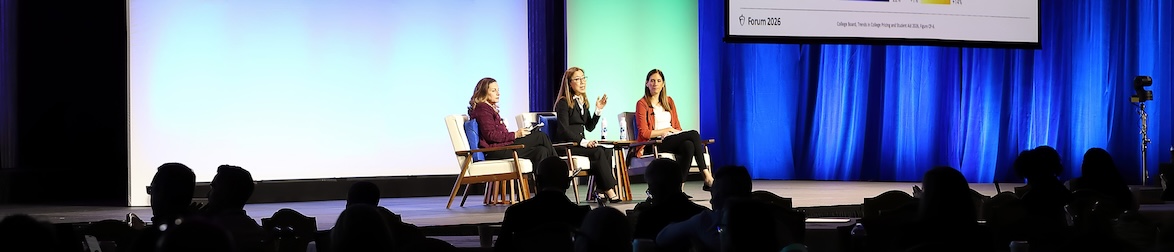
To answer that question, the leaders from higher education, K-12, and college access organizations who gathered at College Board Forum 2026 flipped through the newly published Trends in College Pricing and Student Aid report in their hands and chatted as they considered the options projected on screens above their heads.
The correct answer? $12,290.
But that average tells a small part of the college pricing story because geography and grant aid largely determine what students actually pay to earn a degree.
Trends, a report published since 1983, offers an annual examination of costs associated with one year of undergraduate study in the U.S. and how those costs have changed over time at different institutions. The report also details how much financial aid students get and where aid comes from.
The 2026 edition shows how much the published price of college can differ from what students actually pay.
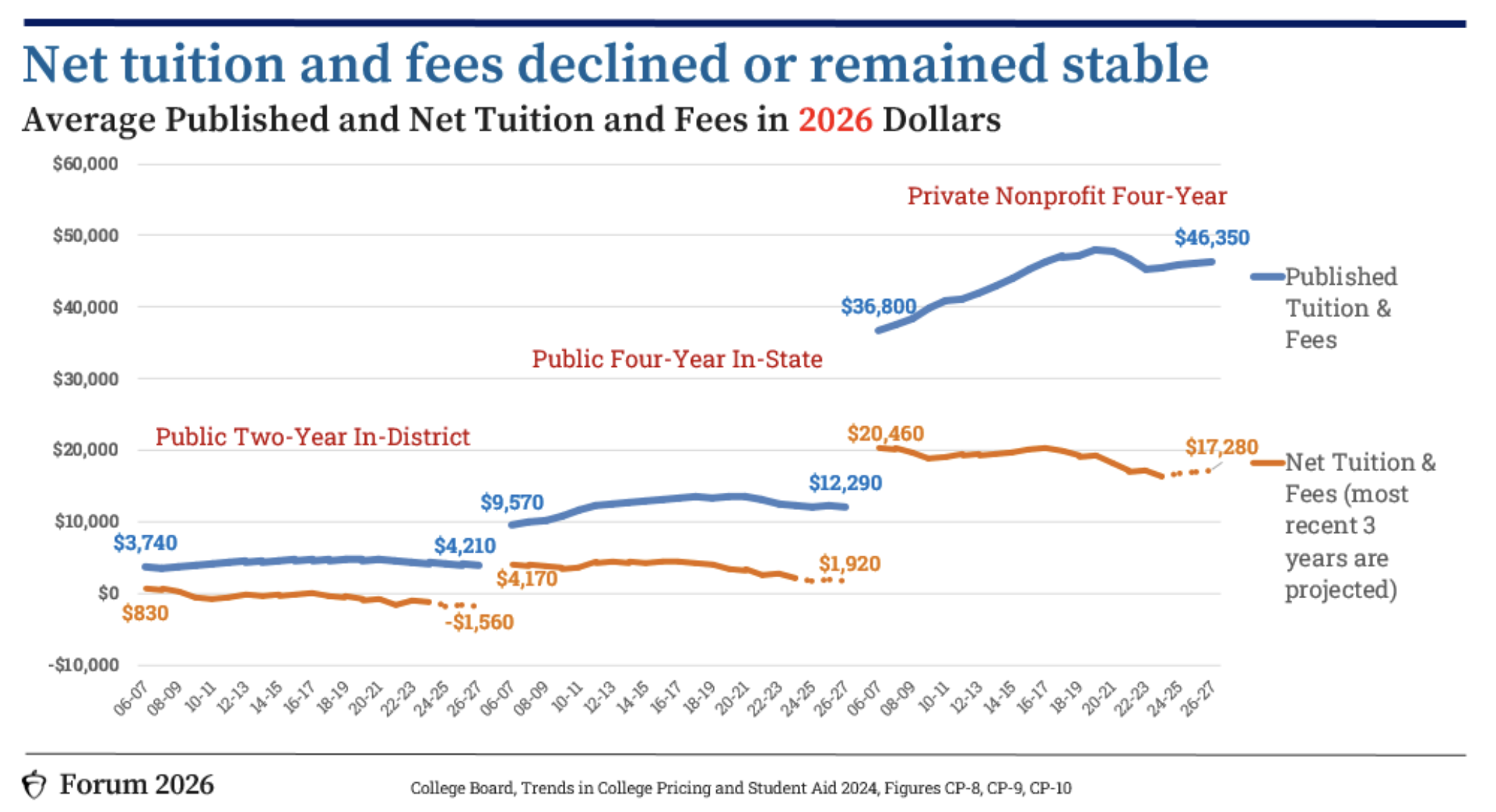
Net prices, what students pay after grant aid is applied, are lower in today’s dollars than they were two decades ago, even though published prices rose for much of that time. This trend was among the key takeaways during the report’s annual release, presented at College Board’s Forum by College Board’s Vice President, Research Jessica Howell; Executive Director, Policy Research Jennifer Ma; and Senior Research Scientist Matea Warner.
What do students actually pay for college, and how is it changing?
A closer look at trends in average prices for tuition and fees shows the gap between the steady increases in published prices and steady shifts in net prices when considered in 2026 dollars.
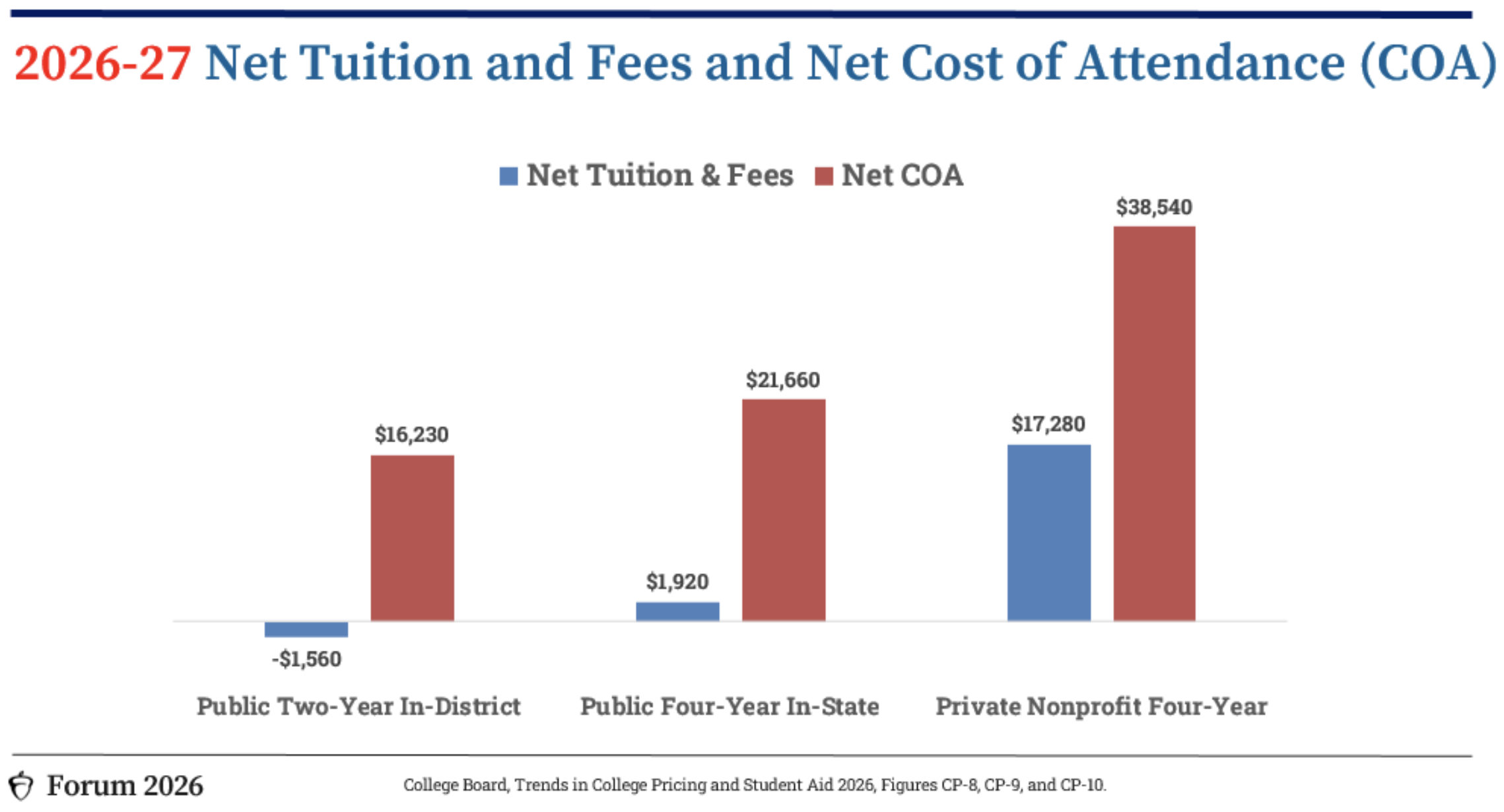
Another important aspect of college costs is the average net cost of attendance, including housing, food, books, and transportation, with averages showing significant differences depending on the type of institution.
The researchers emphasized state differences in published tuition, showing how on the lowest end students in Florida see an average published price of $6,360 while students in New Jersey have the highest with an average of $18,710.
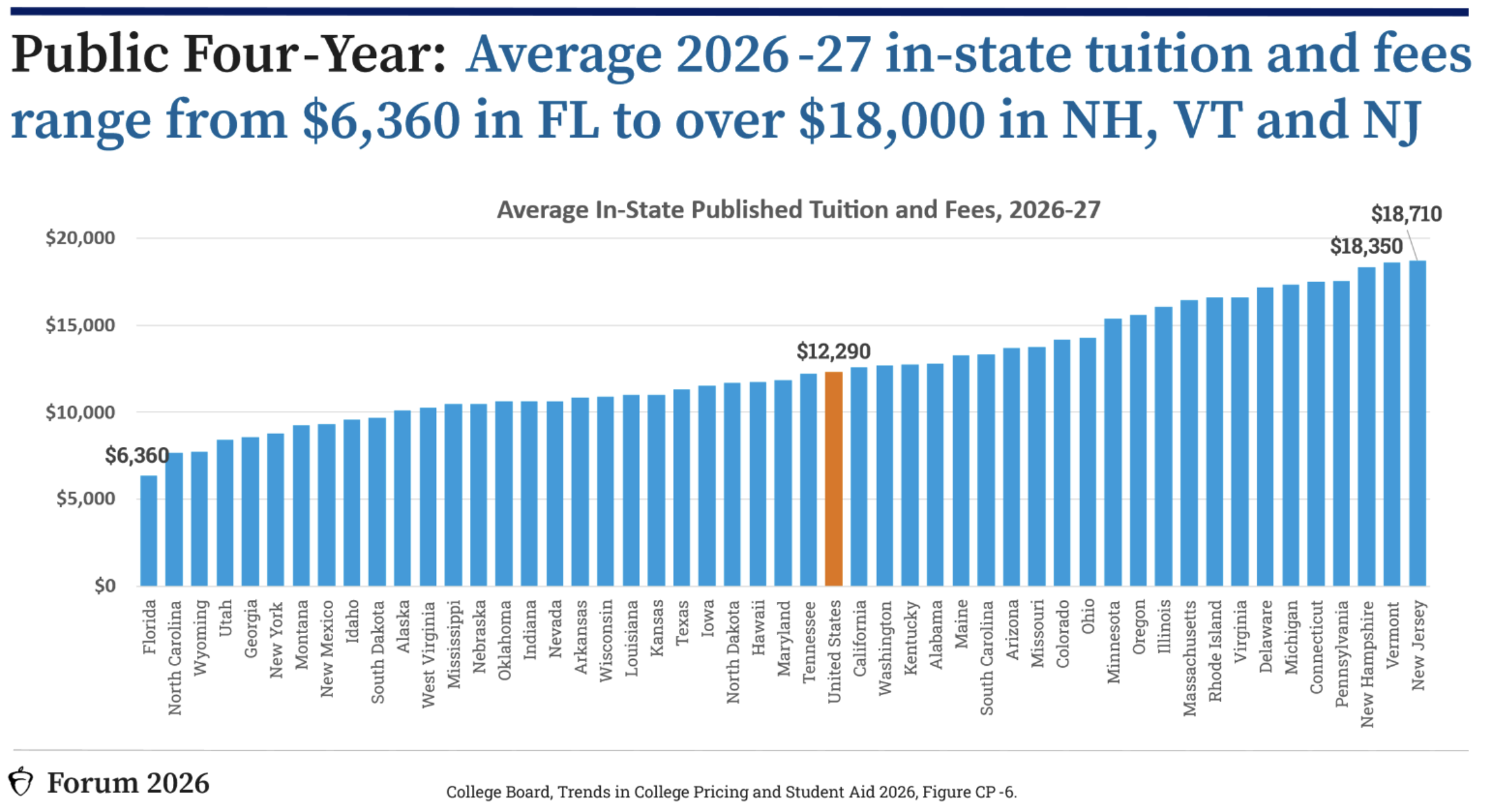
“The majority of students do attend a public institution within their state, so it’s really how much each state charges, that’s what matters most for students,” Ma said.
In 2025-2026, about two-thirds of the $286 billion awarded for financial aid was grant aid, which students do not repay. About one-third came from federal loans. Institutional grants are now 48% of all grant aid, with the amount of this aid having increased 20% over the last 10 years after adjusting for inflation, Warner said.
Loan default rates are higher than before the pandemic, now that payments have resumed after a multi-year pause. Currently, 21% of federal loan borrowers are in default, up from 18% in 2019.
Warner offered context on the $1.7 trillion of outstanding federal student loan debt. More than half of borrowers owe less than $20,000, holding only 12% of the debt. Half of the debt is held by 11% of borrowers, due to this group’s large balances ($80,000 or more).
“These are typically students who either went to graduate school, maybe professional school, law school, med school, and they have an easier time repaying loans,” Warner said. “As opposed to someone with lower balances who potentially, maybe, did not complete a degree, and those are the students that we should be worried about, who might not be able to repay those loans.”
How have federal policy changes affected college lending?
Under the One Big Beautiful Bill Act (OBBBA) passed by Congress in 2025, the Repayment Assistance Plan took effect in July for new loans. This created an income-driven repayment option based on adjusted gross income instead of discretionary income. Some analysts estimate repayment could become more difficult, especially for low- and middle-income borrowers, Ma said.
Warner said graduate students who lose access to grad PLUS loans due to the program’s elimination under OBBBA may turn to private borrowing, which research suggests could grow. Another change from OBBBA lowered limits on how much students and parents can borrow through federal loans. Decreases in the availability of federal loans and possible increases in private borrowing for undergraduate and graduate students will be something to watch since private loans have fewer protections, Warner said.
With the report being released two days after the midterm elections, the presenters closed the session by acknowledging how a shift in Congress may impact college pricing and student aid.
“We've been working on Trends for many years and, if anything, we've learned that a dynamic political environment makes for an equally dynamic policy environment,” Ma said.
To read the report and access tools and resources, visit Trends in Higher Education – College Board Research.
