Honoring History, Inspiring Futures: “Written in the Waters” at the Old Whaling Church
The historic Old Whaling Church in Martha’s Vineyard became a place of reflection, celebration, and inspiration during the Martha’s Vinyard Access institute. Educators, community leaders, and storytellers gathered for an unforgettable evening program titled Written in the Waters.
The talk held on Aug. 7, 2025, wove together history, art, and education to illuminate pathways for young people and honor legacies that ripple through generations.
The evening opened with remarks that grounded the audience in the mission of College Board Access Institute─to connect opportunity with access and ensure students can see themselves in the futures they aspire to build.
Greg Walker, senior vice president for State and District Partnerships at College Board, highlighted transformative courses such as AP® African American Studies, AP Precalculus, AP Seminar, and AP Business with Personal Finance. Each, he noted, offers not just academic rigor. It offers real-world tools for achievement, independence, and community impact.
Caroline Hunter is a civil rights activist and steward of the Polar Bears of Martha’s Vineyard, a cherished community swimming tradition dating back to 1946. She shared the group’s importance as a space of joy, health, cultural pride, and service in which early-morning swims become acts of connection, healing, and belonging. Her remarks reminded attendees that education happens not just in classrooms but also in communities that model resilience and collective care.
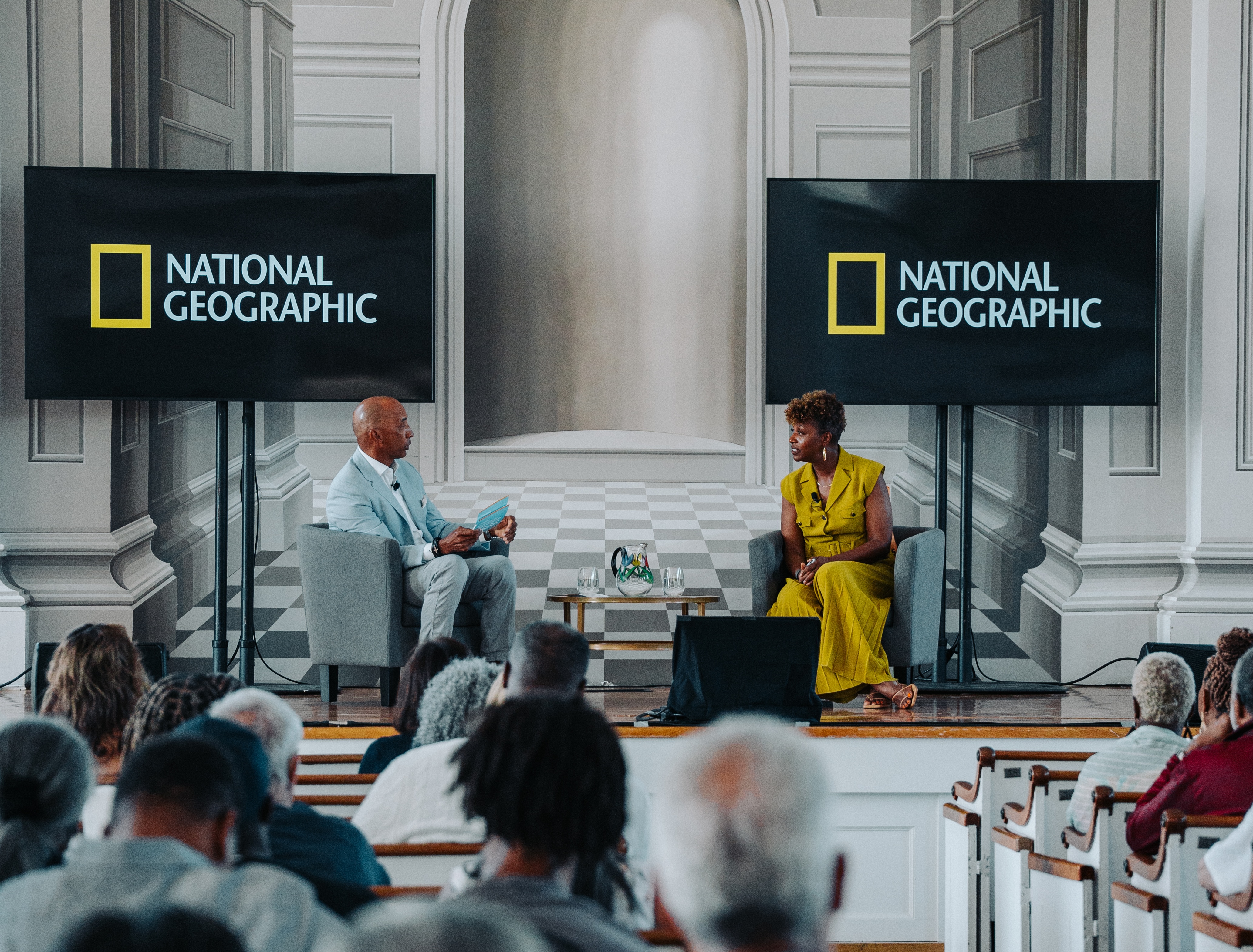
The night’s centerpiece was an in-depth conversation with Tara Roberts, National Geographic Explorer in Residence, award-winning journalist, and author of Written in the Waters. In dialogue with Emmy-winning journalist Byron Pitts, Roberts recounted her extraordinary journey. Roberts had left a successful media career to learn scuba diving and join teams of Black maritime archaeologists searching for sunken slave ships.
Roberts described the moment that changed her life. She saw a photograph at the National Museum of African American History and Culture of Black women in wetsuits, part of a dive team uncovering slave shipwrecks. “There was something about their joy, their freedom,” she recalled. “It spoke to the little girl in me who loved adventure stories but never saw anyone who looked like me in them.”
Her work, she explained, is about more than uncovering artifacts. It’s about honoring the people who endured the Middle Passage. It’s about telling their stories with dignity and connecting descendants to their heritage. Roberts’s storytelling was layered with both history and healing. She emphasized that the transatlantic slave trade isn’t solely Black history. It’s global history that shaped every continent it touched. By recovering these stories from the depths, she hopes to create spaces for acknowledgment, connection, and transformation.
The evening closed with a standing ovation and a call to action: to keep telling the stories that matter, to keep building fair and just educational pathways, and to keep honoring the lives and legacies “written in the waters.” As the audience spilled into the Old Whaling Church’s reception hall for a book signing, the energy was palpable. This wasn’t just an event. It was a moment of shared commitment to truth, community, and the future.