Research
High School Student Use of AI Is Surging: Are Schools Ready?
New research brief on the state of generative artificial intelligence in education
The adoption of generative AI (gen AI) tools like ChatGPT in high schools is no longer on the horizon. It’s here. With student use growing rapidly, mixed feelings—caution, excitement, confusion—prevail, raising a critical question: Are high schools and districts ready?
U.S. High School Students’ Use of Generative Artificial Intelligence, the first research brief in a new series, offers multiple perspectives on how students, parents, teachers, principals, and district leaders are experiencing the rise of AI in education.
At the end of the school year, 84% of high schoolers reported using gen AI tools for schoolwork. This represents a 5-percentage-point increase in just a few months, as students tapped AI to brainstorm ideas and edit content.
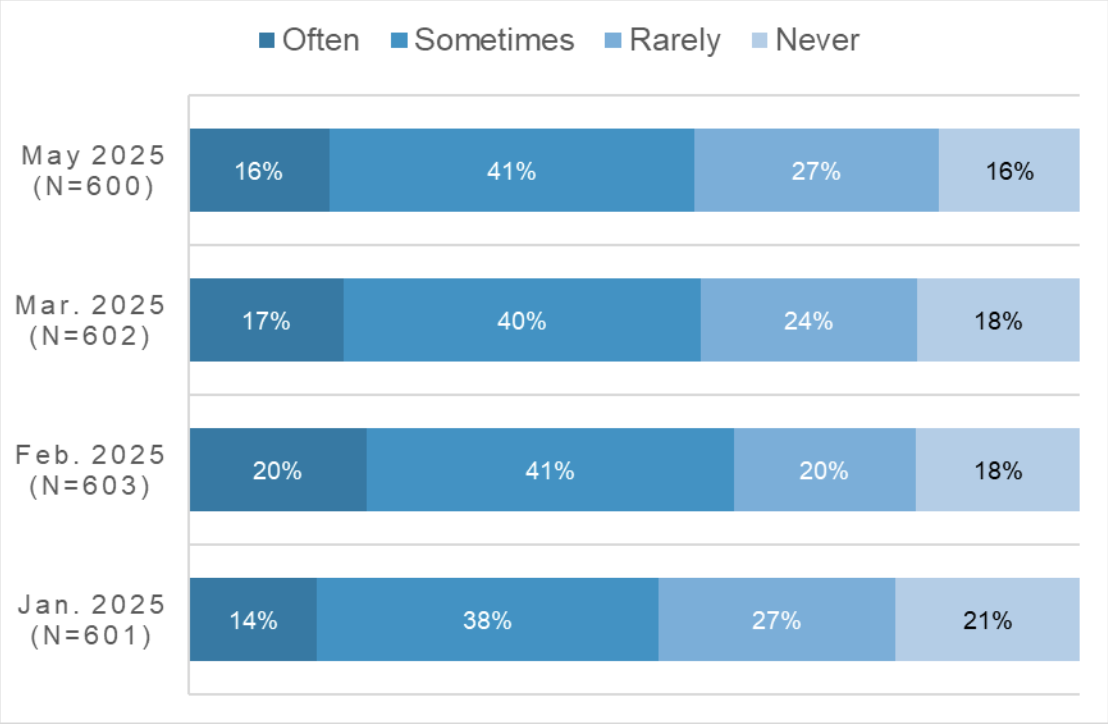
The frequency with which high school students report using GenAI tools for schoolwork, by survey administration timing
While adoption has been swift, the policies and support needed to guide that use are lagging.
Consider this: While nearly all students are using gen AI tools, 1 in 5 high schools allow use but have no formal policy. Only 13% of schools encourage AI use in all classes, and nearly 40% ban it outright. Even when policies exist, nearly half of schools delegate decisions to individual teachers or departments. This creates a patchwork of approaches that leaves students navigating different rules depending on the classroom.
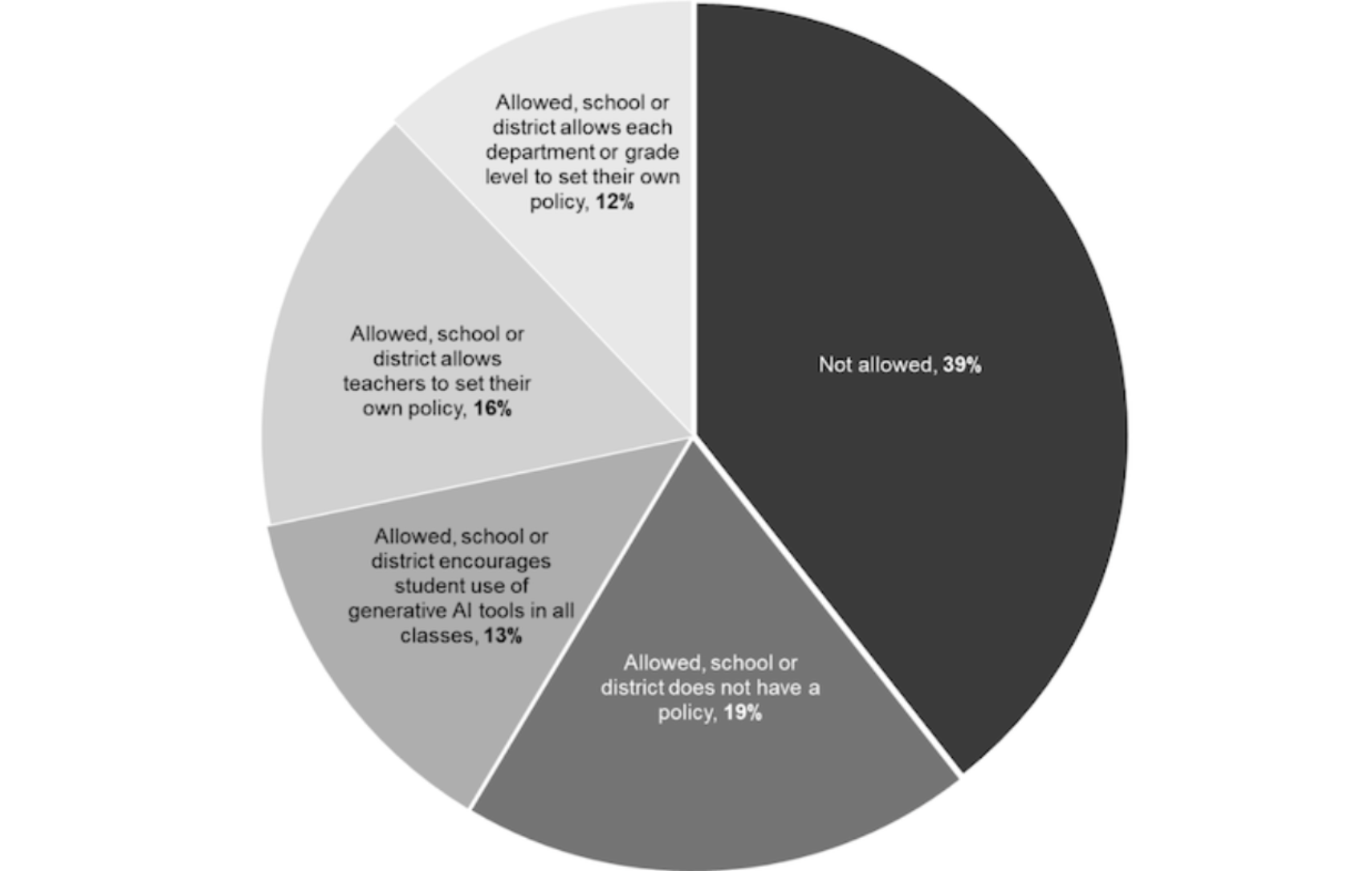
School or district policies around student use of GenAI
This fragmentation presents both a challenge and an opportunity. For K–12 leaders, the data underscores the need for thoughtful, inclusive policies that support responsible AI use, authentic learning, and teacher preparedness. For higher education, it’s a clear signal that many incoming students are active AI users, and institutions will need to consider how AI literacy should be integrated into college-level instruction and assessment to meet students where they are.
Students themselves are navigating this moment with curiosity and caution. Nearly 7 in 10 say AI is most helpful when they need information, and 85% agree it can enhance learning. At the same time, two-thirds of students say they worry that overuse of AI will make them dependent or less intelligent, and more than half express concerns about misinformation, privacy, and skill loss.
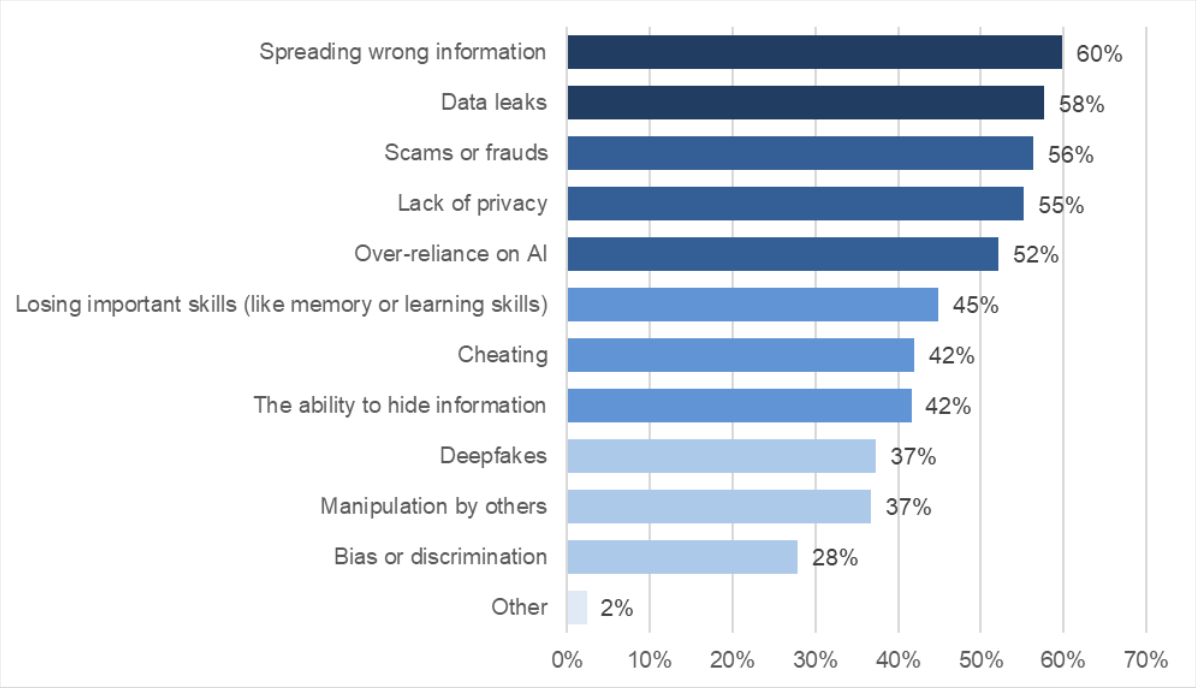
High school students’ concerns about using and interacting with GenAI
Educators share these concerns. Every principal surveyed voiced concern about academic integrity, and nearly all of them voiced concerns about teachers being prepared to use AI and AI’s impact on essential skills. These real challenges signal the field is still finding its footing when it comes to supporting not only students but also educators.
As College Board’s research on gen AI continues, we aim to provide evidence and insights that help schools, districts, and colleges move forward strategically. At the heart of this work is a commitment to authentic learning to ensure that students and educators use AI as a tool to strengthen critical thinking, problem-solving, and collaboration. We will continue to conduct research that raises the voices of students, parents, and educators around gen AI.
Christine, a high school teacher in Ohio, shared, “AI is part of [students’] everyday lives, whether we are teaching it or not. I think this is why it’s so important for us as educators to value process over product. I have shifted my instructional model and grading practices to value process, reflection, and growth more than the finished product.”
The opportunity ahead is significant: to shape AI as a catalyst for learning, not a shortcut, as students pursue a future with AI.